Menus weren’t ready for digital use
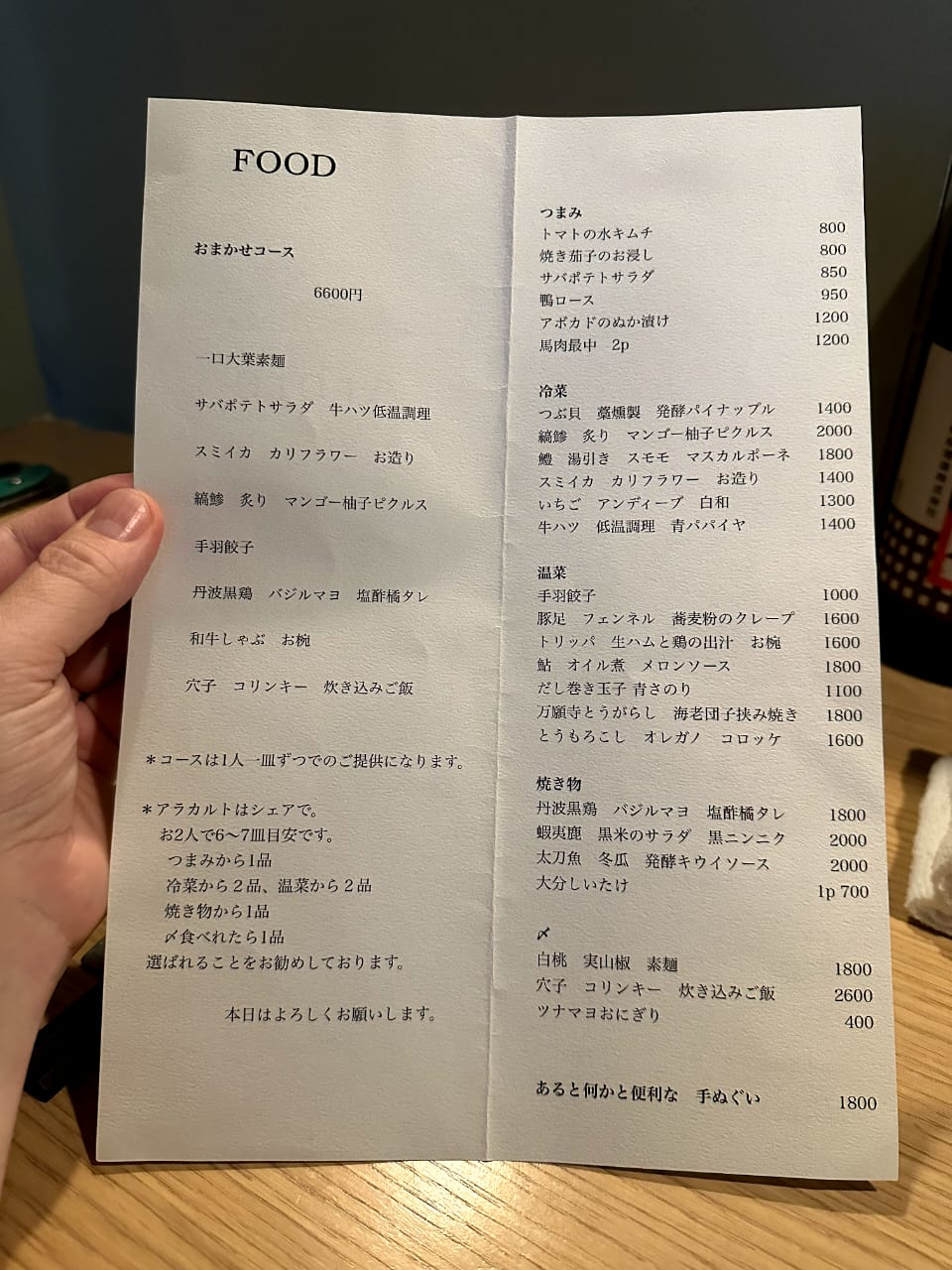
Menus in PDFs, images, and printed formats required manual entry to become organized digital content.
Good food deserves a menu everyone can understand.
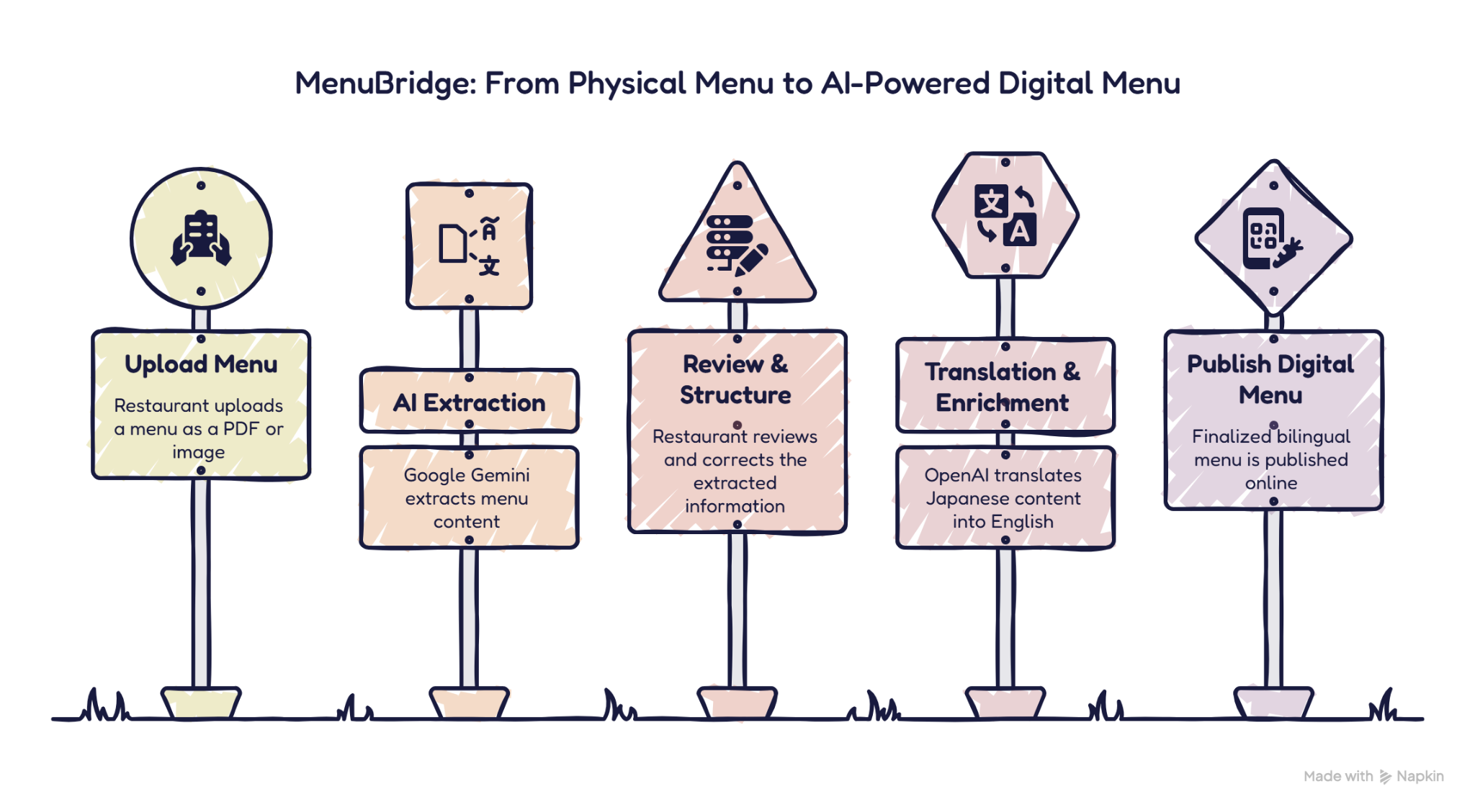
MenuBridge turns existing restaurant menus into digital, bilingual experiences. Restaurants upload the menus they already have, use AI for extraction and translation, and share the finished menus through a QR code.
Explore the story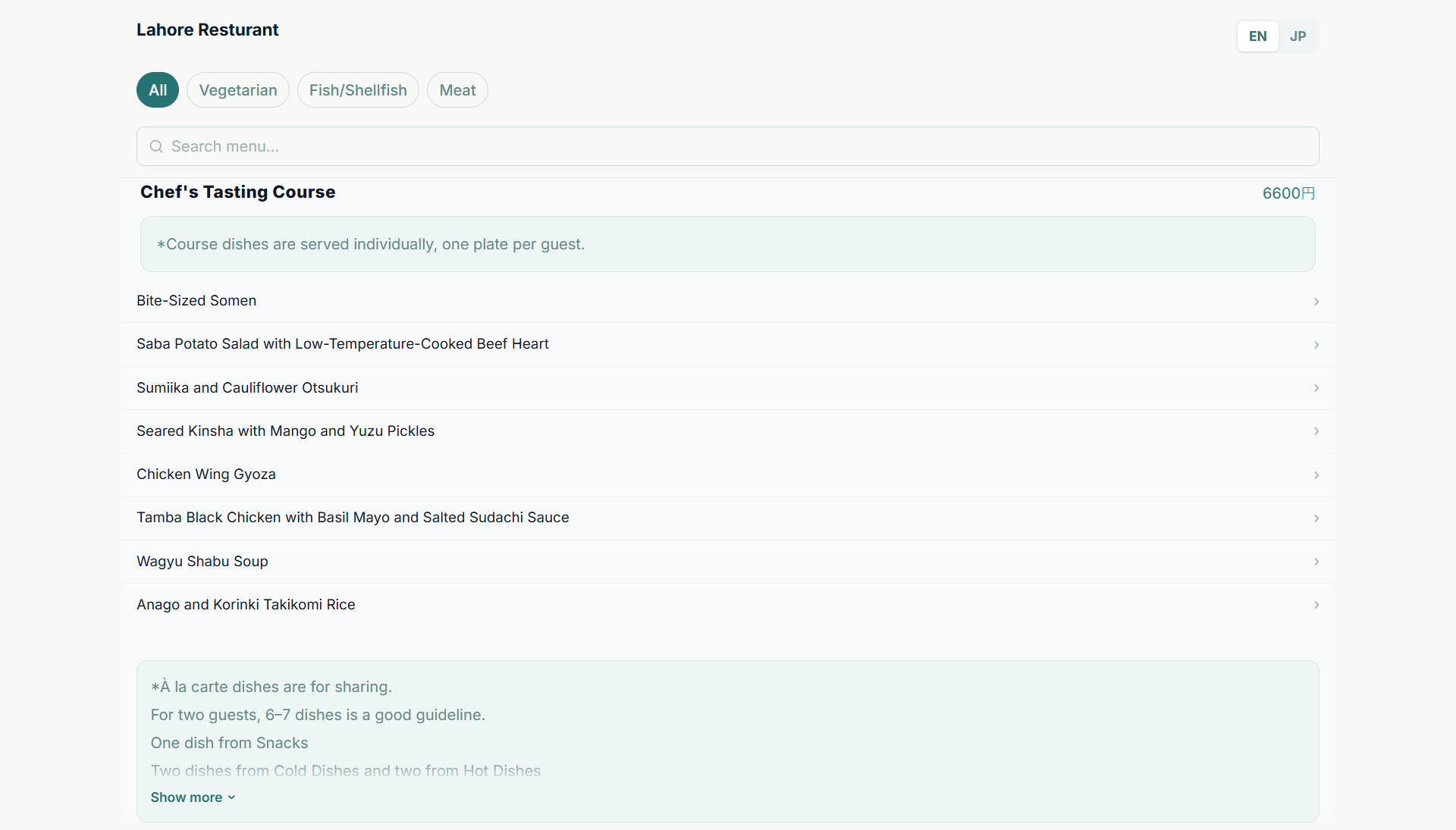
Picture a customer sitting down at a restaurant in Japan. The food looks great, but the menu is entirely in Japanese. They might try a translation app, ask the staff for help, or simply order something they are not quite sure about.
Restaurant owners already have their menus, perhaps as PDFs, printed sheets, or photographs. Creating a second version in another language means extra work, and every menu change makes that work harder.
MenuBridge was created to make things easier for both sides. We built a platform where restaurants upload existing menus, use AI to turn them into organized, translated content, and share a Japanese–English digital menu through a simple QR code.
3 connected challenges shaped the product's direction.
Menus in PDFs, images, and printed formats required manual entry to become organized digital content.
Japanese ingredients, regional dishes, and traditional preparation methods can be difficult for international guests to understand without context.
Restaurants needed a simple way for customers to open a digital menu on their phones without downloading an app.
Our approach connected useful experiences with the technology needed to power them.
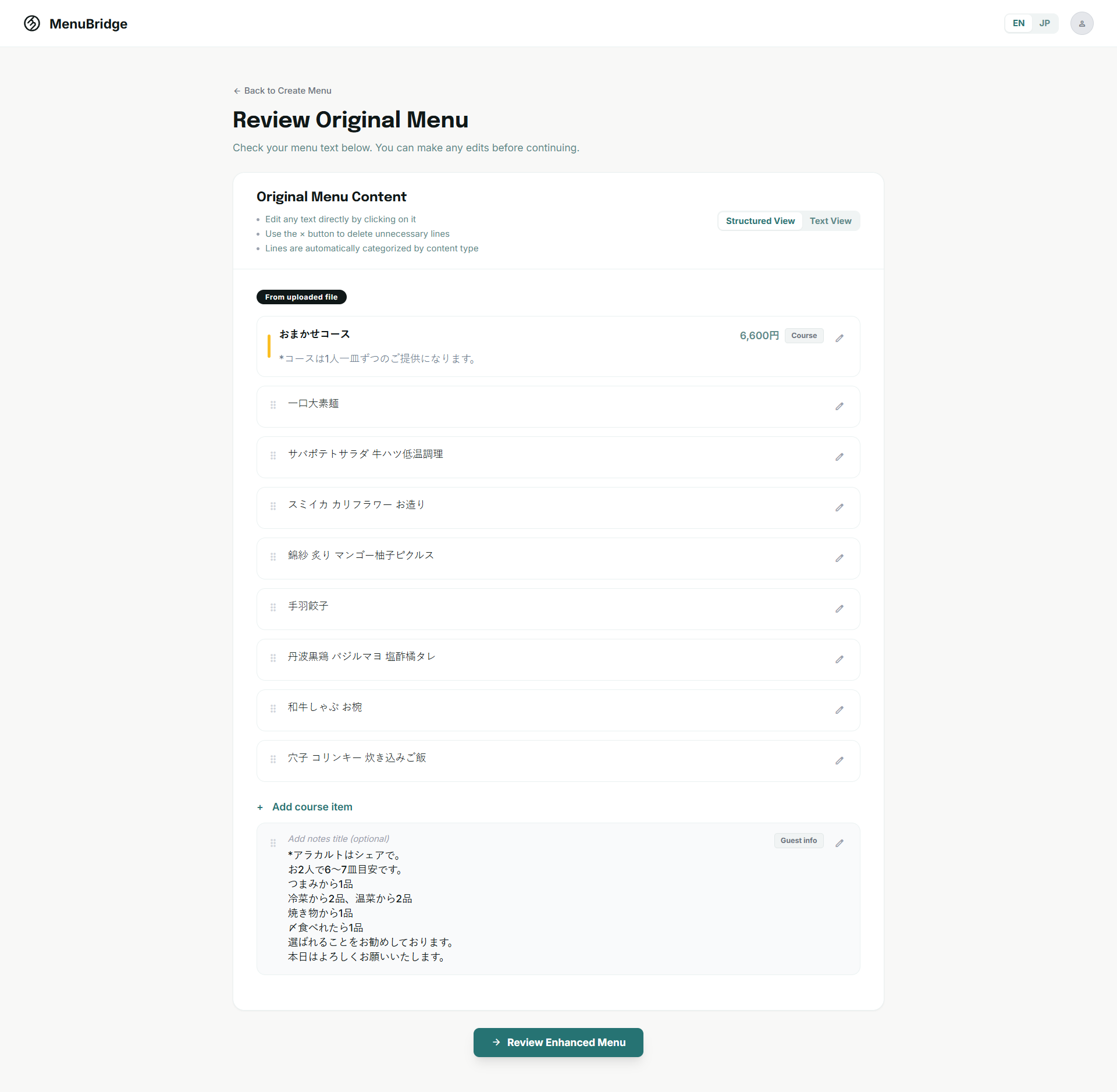
Google Gemini processes uploaded PDFs and images, identifying Japanese text, dishes, descriptions, prices, and categories. Restaurant owners review the extracted information and make corrections before continuing.
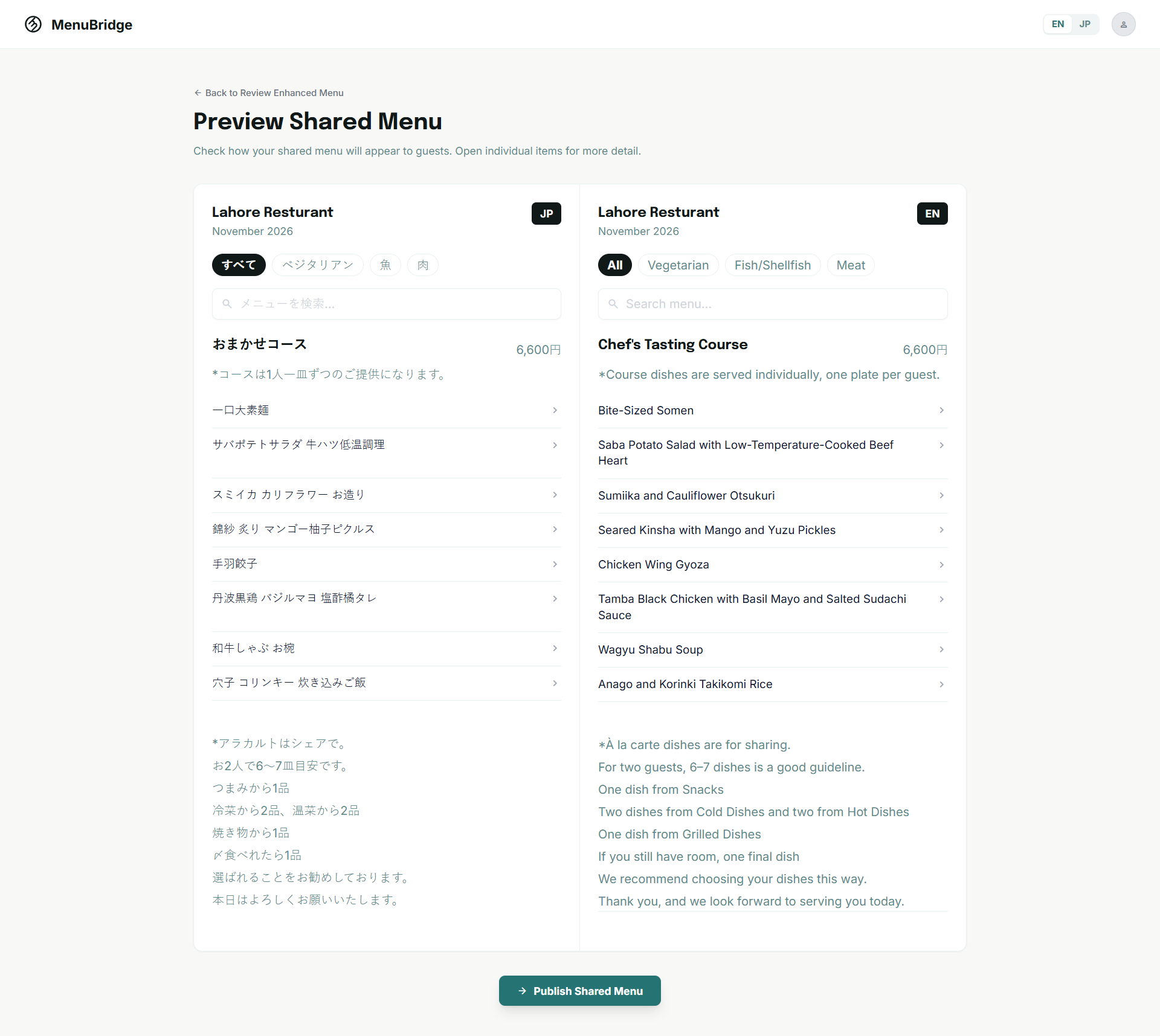
OpenAI translates menu content and enriches dish descriptions with additional context. Restaurants review translations before publishing. The initial experience supports Japanese and English, with a language structure designed to accommodate more languages.
A QR-based publishing experience opens the menu directly in a mobile browser. Customers browse categories, read descriptions, check prices, and switch between available languages without installing an app.
End-to-end product development across frontend, backend, AI integrations, infrastructure, and deployment.
Built the core SaaS application and connected frontend, backend, AI workflows, infrastructure, and deployment.
A React application for uploading menus, reviewing extracted content, editing items, organizing categories, and managing published menus.
Node.js, Express, and PostgreSQL manage restaurant information, menu content, and digital publishing data.
Gemini handles extraction and OpenAI handles translation and enrichment. A backend-hosted MCP server exposes menu-processing tools, integrated with OpenAI ChatKit.
Docker containers deployed on AWS bring the application and AI workflows together in a hosted product.
A connected stack for digital menus, AI processing, and cloud delivery.
MenuBridge has onboarded 20 restaurants and digitized 30+ menus, initially focusing on Japanese–English experiences. Restaurant owners can manage and share their existing menus, while international guests explore food in a language they understand.
Turn existing PDFs and menu images into digital menus without typing everything from scratch.
Explore dishes and descriptions in Japanese and English.
Scan a QR code and open the menu directly on a phone.
From the original menu to AI extraction, translation, and the published guest experience, with illustrative restaurant visuals supplied in the brief.


Keep exploring how we turn real business problems into working products.
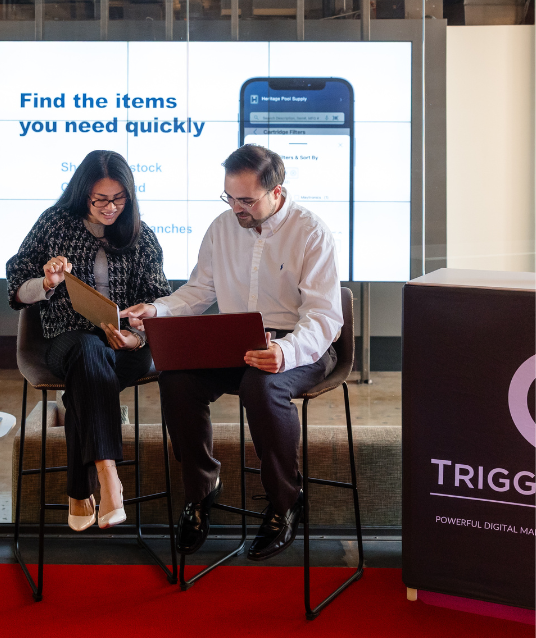 DIGITAL ADVERTISING
25,000+ screens. One platform. No room for disruption.
We helped Triggerpoint Media modernize its advertising platform, improve performance, and strengthen security while keeping the business running across thousands of connected screens.
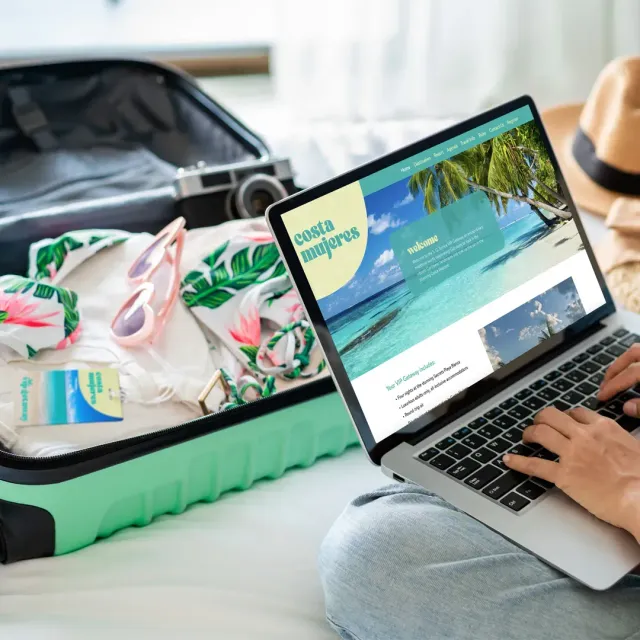 CORPORATE REWARDS & INCENTIVES
One rewards platform. Different brands. Thousands of happy moments.
We helped V2 Incentives build a shared backend that brings branded promotions, reward redemptions, payments, and real-time updates together without building a separate system for every corporate client.
 FACILITY & AIRPORT OPERATIONS
Big facilities need more than a checklist to keep everything running.
We helped SMS Holdings bring inspections, reporting, and field operations into one connected web and mobile platform, helping inspectors cover large facilities while keeping operations teams informed.
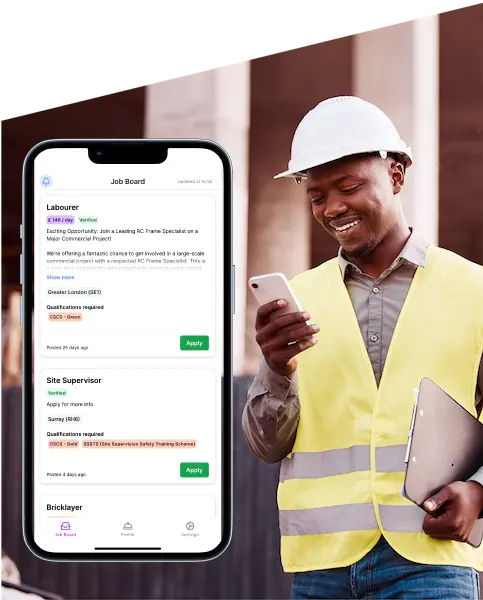 CONSTRUCTION TECH
Finding the right construction job shouldn’t be harder than doing the job itself.
A connected job-discovery platform helping construction workers find relevant opportunities, manage their professional information, and search naturally with AI.